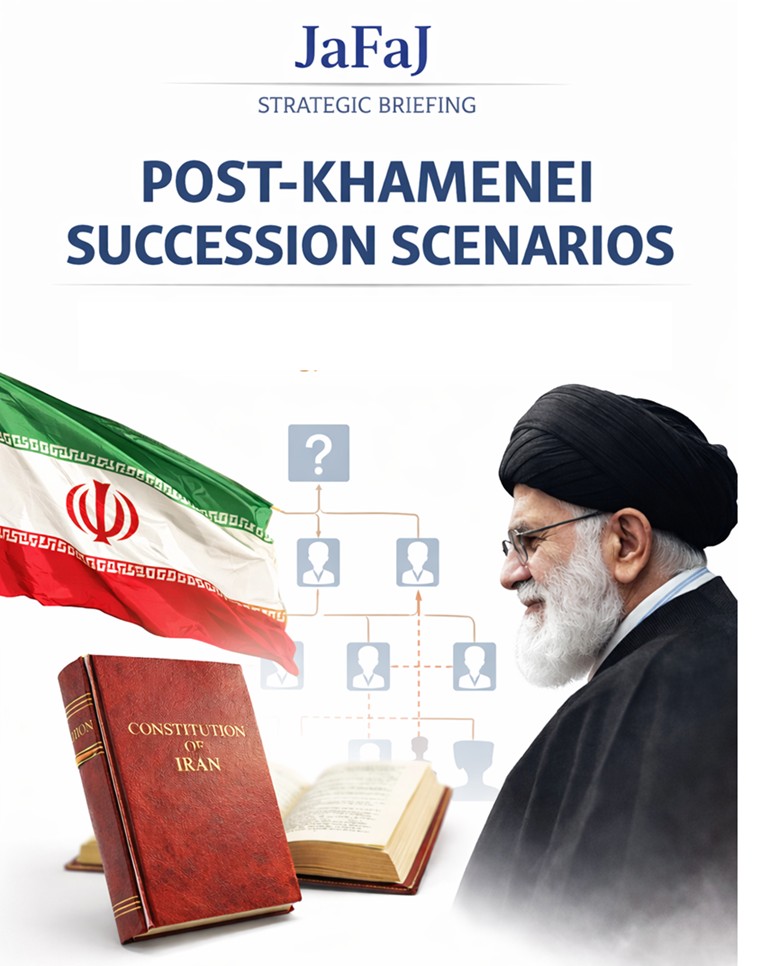
POST-KHAMENEI SUCCESSION SCENARIOS: INSTITUTIONAL CONSTRAINTS, PROBABILITY MODELING, AND ENERGY RISK TRANSMISSION
JAFAJ STRATEGIC BRIEFING
JAFAJ ANALYTICAL FRAMEWORK
This briefing forms part of the JAFAJ Iran 2.0 analytical framework examining how institutional design, leadership succession, and energy market volatility interact within the political architecture of the Islamic Republic of Iran.
DISCLAIMER
This assessment relies on publicly available information at the time of publication. Reports indicate that senior officials may have died; identities remain unconfirmed. Candidates evaluated herein are included based on documented institutional roles and constitutional eligibility. Verified changes would materially alter probability weighting and scenario modeling.
EXECUTIVE SUMMARY
INSTITUTIONAL CONSTRAINTS, SUCCESSION PROBABILITY MODEL, AND RISK TRANSMISSION
Post-Khamenei succession is structurally constrained by the institutional architecture of the Islamic Republic rather than determined by open political competition. Outcomes are determined by structural filters embedded within the constitutional and security architecture of the Islamic Republic.
Five binding constraints shape the viable decision set:
- Assembly of Experts majority arithmetic
- Clerical qualification under Article 109
- IRGC command cohesion
- Preservation of nuclear threshold ambiguity (60% enrichment baseline)
- Oil export stability within the sanctioned baseline (~1.8–2.2m bpd)
IRGC command cohesion functions as the binding constraint; the Assembly of Experts operates within security-defined boundary conditions.
BASE CASE SCENARIO — CLERICAL CONSENSUS CONTINUITY (45–50%)
The most probable pathway is managed consolidation around a consensus-viable cleric (e.g., Mohsen Araki, Alireza Arafi, Sadeq Larijani).
Expected characteristics:
- Constitutional procedure preserved
- No dynastic signaling
- IRGC tolerance maintained
- Nuclear ambiguity sustained
- Proxy deterrence calibrated
- Oil exports stabilize within sanctioned baseline (~1.8–2.2m bpd)
- Brent geopolitical premium contained within the historical $5–$15 range
This pathway preserves regime architecture while limiting systemic shock.
SECURITY CONSOLIDATION SCENARIO (30–35%)
An IRGC-aligned consolidation pathway (e.g., Mojtaba Khamenei, Mohseni-Ejei) becomes more likely if elite risk perception shifts toward internal instability over sanction exposure.
Expected characteristics:
- Tighter internal coercive cohesion
- Reduced diplomatic elasticity
- Elevated breakout signaling risk
- Reinforced sanctions durability
- Brent premium expansion toward the $10–$20 band
- Increased inflation persistence risk across OECD economies
This pathway strengthens internal control but embeds higher external volatility.
CONTROLLED RECALIBRATION SCENARIO (15–20%)
A limited technocratic or reform-adjacent alignment emerges only if sustained inflationary pressure and export constraints trigger elite recalibration.
Expected characteristics:
- Structured sanctions-for-compliance signaling
- Incremental transparency gestures
- Export movement toward technical capacity (~3.0–3.3m bpd)
- Compression of embedded geopolitical risk premium
This scenario moderates volatility but requires explicit IRGC accommodation.
LOW-PROBABILITY, HIGH-IMPACT: FRAGMENTATION SCENARIO (<10%)
Systemic conflict requires simultaneous failure of:
- IRGC command cohesion
- Assembly succession coherence
- Export stability within sanctioned baseline
- Centralized coercive hierarchy
Absent security fragmentation, regime collapse remains structurally unlikely.
PRIMARY RISK TRANSMISSION CHANNEL
Succession risk transmits primarily through global energy markets:
Oil supply expectations
→ Brent risk premium
→ Inflation persistence
→ Monetary policy path
→ Capital allocation volatility
Leadership transition primarily affects the magnitude and duration of the embedded geopolitical risk premium.. It does not alter Iran’s structural production capacity.
- CONSTITUTIONAL FRAMEWORK: SELECTION OF THE SUPREME LEADER
Foundational Structure:
The constitutional architecture of the Islamic Republic of Iran is designed to tightly control leadership succession. Its constitutional architecture centralizes ultimate authority in a single unelected office — the Supreme Leader — under the doctrine of Velayat-e Faqih (Guardianship of the Islamic Jurist).
The constitutional design centralizes ultimate authority in the office of the Supreme Leader, with vertically integrated influence across military, judicial, and supervisory institutions. Succession represents the system’s highest institutional stress point.
The relevant constitutional provisions include:
- Article 5 — Establishes governance under the rule of a qualified Islamic jurist during the absence of the Twelfth Imam.
- Articles 107–112 — Define the method of selection, qualifications, oversight mechanisms, and supervisory authority of the Supreme Leader.
- Article 110 — Enumerates executive powers, including:
- Commander-in-Chief of the Armed Forces
- Appointment and dismissal of senior military commanders
- Appointment of the head of the judiciary
- Appointment of six clerical members of the Guardian Council
- Authority over state broadcasting
- Determination of general policy after consultation with the Expediency Council
- Article 111 — Governs removal, incapacity, and interim arrangements if the Supreme Leader dies, resigns, or is deemed unable to perform his duties.
The structure is vertically centralized. Authority flows downward from the Supreme Leader into military, judicial, and supervisory institutions.
Selection Mechanism:
The Supreme Leader is chosen by the Assembly of Experts, an 88-member body of clerics elected by the public but vetted by the Guardian Council.
The process operates as follows:
- Members of the Assembly are screened and approved by the Guardian Council.
- Upon vacancy of the office, the Assembly convenes in closed session.
- A majority internal vote selects the new Supreme Leader.
- No public referendum or parliamentary confirmation is required.
- The Assembly may appoint:
- A single Leader; or
- A temporary leadership council (a theoretical but rarely exercised option).
The constitutional requirement under Article 109 specifies qualifications including Islamic scholarship, justice, and political insight. However, the 1989 amendment removed the explicit requirement that the Leader be a “marja” (highest-ranking clerical authority), lowering the threshold for eligibility and increasing political flexibility.
Institutional Reality
Legally, the Assembly decides. Practically, the decision is shaped by power networks outside the formal text.
Three forces shape the outcome:
- IRGC Command Influence
The Islamic Revolutionary Guard Corps (IRGC) maintains economic influence estimated at 20–30% of national GDP through construction, energy, telecommunications, and logistics sectors. Its security command cohesion is decisive in transition periods. - Senior Clerical Establishment in Qom
Religious legitimacy remains critical. A candidate perceived as lacking scholarly credibility risks institutional resistance. - Informal Elite Networks
Expediency Council members, judiciary leadership, intelligence services, and senior political families contribute to consensus formation.
The Assembly vote is decisive legally. In practice, IRGC cohesion materially constrains the Assembly’s viable decision set.
Civilian Control of the Military
The IRGC’s economic holdings and parallel command authority create a dual-state structure.
Reform would require:
- Prohibiting active military control of commercial enterprises.
- Consolidating all armed forces under unified civilian oversight.
- Codifying transparency in military budgeting.
Judicial Independence
The head of the judiciary is appointed by the Supreme Leader.
Reform would require:
- Multi-branch judicial appointment process.
- Fixed terms with parliamentary confirmation.
- Constitutional court insulated from executive or clerical removal.
Clarification of Interim Authority (Article 111)
Current provisions allow interim arrangements but lack clear timelines.
Reform would require:
- Mandatory succession timeline (e.g., within 90 days).
- Limitations on prolonged temporary councils.
- Public reporting transparency during interim governance.
Without these reforms, succession changes individuals — not architecture.
- POSSIBLE SUCCESSION CANDIDATES
MACRO BASELINE SNAPSHOT (REFERENCE FRAMEWORK)
All succession scenarios operate within the following structural constraints:
- Nuclear enrichment level: up to 60% U-235¹⁰
• Breakout latency: assessed in weeks to months¹¹
• Oil export baseline: ~1.8–2.2 million barrels per day under sanctions⁶
• Technical production capacity: ~3.0–3.3 million bpd ²⁷
• Strait of Hormuz transit exposure: ~17–20 million bpd (~20% global petroleum)⁸
• Global oil demand baseline: ~102–103 million bpd⁵
• Historical Brent sensitivity: sustained 1m bpd shift ≈ $5–$15 price ¹⁵,²⁸
• OECD CPI transmission: ~0.3–0.5% per sustained $10 oil increase³⁰
These variables define the volatility range within which leadership outcomes operate. Succession influences direction and risk premium — not structural capacity constraints.
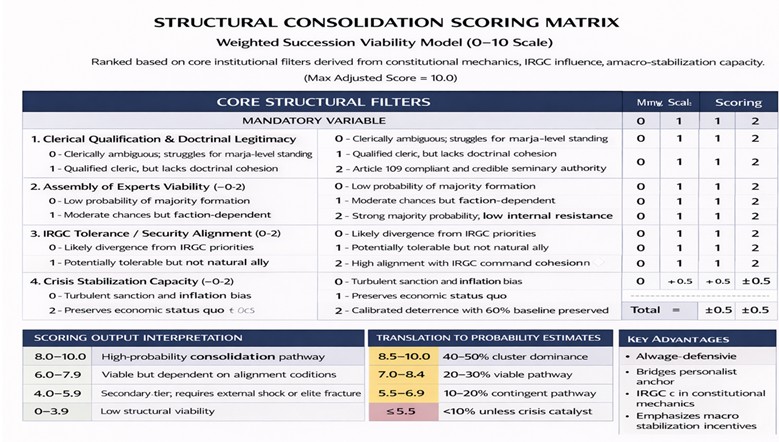
SUCCESSION SCORING METHODOLOGY
Candidate evaluation is derived from a structured five-variable model designed to measure institutional viability rather than personality appeal. Each candidate is assessed across the following dimensions:
- Constitutional Eligibility (Article 109 compliance)
- Assembly of Experts Viability (coalition probability within the 88-member body)
- IRGC Tolerance or Support (security alignment and coercive compatibility)
- Crisis Management Capacity (ability to govern under sustained inflation ~30–40%, currency pressure, youth unemployment above 20%, and oil-dependent fiscal constraints)
- Nuclear Threshold Preservation Capacity (deterrence continuity and enrichment management)
Baseline weighting assumes equal distribution across all five variables (20% each).
Structural Scores (0–10 scale) reflect relative comparative strength within the candidate set. Scores of 8–10 indicate structural advantage across multiple institutional filters. Scores of 6–7 indicate viable but coalition-dependent candidates. Scores below 6 indicate contingent or low-momentum pathways requiring unusual alignment conditions. Scores are ordinal analytical indicators, not deterministic forecasts or absolute probability measures.
Probability bands incorporate:
- Institutional bias toward continuity
- IRGC cohesion assumptions
- Historical precedent (1989 succession)
- Current macroeconomic constraints
Sensitivity testing adjusts IRGC weighting to 35%, with remaining variables proportionally reduced to 16.25% each, to model security-dominant consolidation scenarios.
COMPARATIVE SCORING MATRIX
BASELINE AND IRGC-WEIGHTED SENSITIVITY
Five-Variable Model (Equal 20% Weighting)
| Candidate | Eligibility | Assembly | IRGC | Crisis | Nuclear | Base Weighted Score |
| Mohsen Araki | 9 | 8 | 7 | 7 | 8 | 7.8 |
| Alireza Arafi | 9 | 7 | 6 | 6 | 8 | 7.2 |
| Sadeq Larijani | 8 | 7 | 6 | 7 | 7 | 7.0 |
| Mojtaba Khamenei | 7 | 6 | 9 | 6 | 8 | 7.2 |
| Mohseni-Ejei | 7 | 6 | 8 | 6 | 7 | 6.8 |
| Hassan Khomeini | 7 | 5 | 5 | 6 | 7 | 6.0 |
IRGC-Dominant Sensitivity Test
(IRGC = 35%; Other Variables = 16.25% Each)
| Candidate | Base Score | IRGC-Weighted Score | Δ Change |
| Mohsen Araki | 7.8 | 7.6 | -0.2 |
| Mojtaba Khamenei | 7.2 | 7.6 | +0.4 |
| Mohseni-Ejei | 6.8 | 7.0 | +0.2 |
| Alireza Arafi | 7.2 | 6.9 | -0.3 |
| Sadeq Larijani | 7.0 | 6.8 | -0.2 |
| Hassan Khomeini | 6.0 | 5.8 | -0.2 |
CONSTITUTIONALLY ELIGIBLE CLERICAL CANDIDATES
The following individuals meet or plausibly meet Article 109 clerical qualifications and are institutionally positioned within the Assembly of Experts or senior regime structures:
- Mohsen Araki
- Alireza Arafi
- Gholam-Hossein Mohseni-Ejei
- Mojtaba Khamenei
- Hassan Khomeini
- Sadeq Larijani
- Mohammad Mehdi Mirbagheri
- Hashem Hosseini Bushehri
- Ahmad Khatami
- Mohammad Reza Modarresi Yazdi
- Hossein Noori Hamedani
These figures constitute the formal succession pool under constitutional rules.
POLITICALLY INFLUENTIAL POWER BROKERS (SYSTEM-RELEVANT)
The following actors may influence succession outcomes through coalition-building, security alignment, or interim authority — even if constitutional eligibility is constrained or ambiguous:
- Ali Larijani (elite political mediator; clerical status debated in apex context)
- Masoud Pezeshkian (constitutional interim authority role under Article 111)
- Mohammad Mokhber (economic-establishment and IRGC-aligned networks)
These figures are not primary constitutional successors but may shape coalition formation or transitional stability.
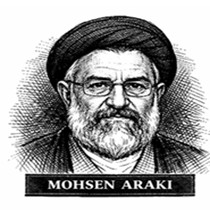 |
MOHSEN ARAKI Cluster: Clerical Consensus Managers |
Profile: Ayatollah Mohsen Araki is a senior cleric and current member of the Assembly of Experts. He possesses clear Article 109 eligibility and recognized seminary standing within Qom’s clerical hierarchy. Unlike more polarizing figures, Araki carries limited factional baggage and has experience navigating international religious engagement channels. His profile aligns with institutional continuity rather than ideological escalation.
Institutional Position: Araki’s primary strength lies in convergence potential:
- Clerical Legitimacy: Clean qualification under constitutional standards.
- Assembly Viability: Broadly acceptable across conservative clerical blocs.
- IRGC Tolerance: No structural conflict; preserves existing security architecture without threatening economic interests.
He does not represent reform. He represents procedural stability.
- Security & Nuclear Posture: Under Araki, Iran is expected to preserve its current enrichment ceiling and maintain breakout ambiguity without overt weaponization signaling. Proxy coordination would remain calibrated and centrally managed. No doctrinal shift is anticipated.
- Sanctions & External Posture: Araki is unlikely to pursue rapid normalization but may permit limited compliance signaling designed to stabilize sanction pressure rather than reverse it. Expect continuity in deterrence posture toward Israel and controlled diplomatic engagement with Europe.
- Energy & Macro Implications: This pathway is associated with volatility containment rather than expansion. Oil exports would likely stabilize within the upper sanctioned band if diplomatic space marginally widens. Brent risk premium remains embedded but not structurally widened.
Comparative Assessment: Araki represents the lowest-friction consolidation pathway. He satisfies constitutional requirements, avoids dynastic optics, and minimizes internal elite resistance. His elevation would signal continuity under disciplined control rather than transformation.
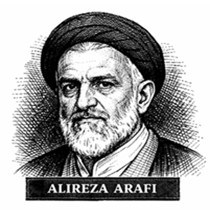 |
ALIREZA ARAFI Structural Score: 7.5 / 10 Cluster: Clerical Consensus Managers |
Profile: Ayatollah Alireza Arafi serves as head of Iran’s seminaries and holds membership in both the Assembly of Experts and the Guardian Council. His authority is rooted in religious jurisprudence rather than executive statecraft. He is viewed as a doctrinal custodian of the system rather than a political operator.
Institutional Position: Arafi’s strength lies in theological credibility.
- Clerical Legitimacy: Strong seminary standing; clear constitutional eligibility.
- Assembly Viability: Respectable coalition potential, though less naturally unifying than Araki.
- IRGC Tolerance: Acceptable, though not organically embedded in security networks.
He is institutionally safe but not strategically dynamic.
- Governance Orientation: An Arafi leadership would likely emphasize ideological consistency and internal clerical cohesion over external recalibration. Decision-making would likely remain conservative and jurisprudence-driven, with limited appetite for structural reform or diplomatic experimentation.
- External & Sanctions Posture: Engagement posture would remain cautious. Sanctions architecture would likely endure with minimal proactive compliance signaling. Stability, not adjustment, would define foreign policy tone.
- Energy & Macro Implications: Under Arafi, export levels would likely remain near current sanctioned averages. Volatility would reflect external pressures rather than internal policy shifts. Markets would interpret his leadership as static continuity rather than recalibration.
Comparative Assessment: Arafi represents stable doctrinal preservation but offers less flexibility than consensus-oriented clerics. He is a continuity candidate with lower reform elasticity and moderate consolidation potential.
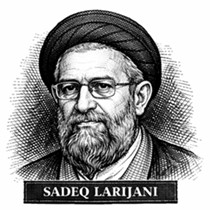 |
SADEQ LARIJANI Structural Score: 6.5 / 10 Cluster: Clerical Consensus Managers |
Profile: Ayatollah Sadeq Larijani is a former Judiciary Chief and long-serving member of the Assembly of Experts. He comes from one of Iran’s most politically entrenched clerical families and has operated at the intersection of judicial authority, constitutional oversight, and elite power mediation. His credibility derives from institutional experience rather than grassroots clerical charisma.
Institutional Position:
- Clerical Legitimacy: Constitutionally qualified with recognized jurisprudential credentials.
- Assembly Viability: Strong procedural familiarity; positioned to navigate internal fragmentation.
- IRGC Tolerance: Acceptable but not organically security-rooted.
- Coalition Elasticity: Moderate; capable of negotiated consolidation.
Larijani’s advantage is procedural fluency in moments of elite uncertainty.
- Governance Orientation: A Larijani leadership would likely prioritize system management over ideological signaling. Expect emphasis on institutional continuity, legal process, and elite balancing rather than doctrinal assertion or reform momentum.
- External & Sanctions Posture: Selective diplomatic calibration is more plausible under Larijani than under security-hardline figures. While structural deterrence would remain intact, tactical engagement channels could reopen incrementally to manage pressure without conceding strategic posture.
- Energy & Macro Implications: This pathway implies moderate volatility compression relative to security-heavy scenarios. Export stabilization slightly above baseline levels is plausible if limited compliance mechanisms emerge.
Comparative Assessment: Larijani is a bridge candidate suited to Assembly fragmentation scenarios. He does not command organic security dominance nor reformist momentum, but he offers elite-manageable continuity under negotiated consensus.
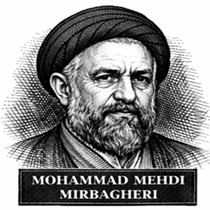 |
MOHAMMAD MEHDI MIRBAGHERI Structural Score: 5.0 / 10 Cluster: Security Aligned Consolidators |
Profile: Assembly member²¹ and ideologically hardline theologian aligned with conservative doctrinal networks. Strong religious credentials but limited diplomatic track record.
- Security Posture: Enrichment posture preserved at current levels²²; breakout signaling may intensify under pressure²³. Proxy tempo strengthened²⁴.
- United States Policy Orientation: Confrontational; sanction durability reinforced²⁵.
- Israel Policy Orientation: Escalation rhetoric likely increases; deterrence posture hardened.
- Europe Policy Orientation: Limited diplomatic flexibility; financial isolation persists²⁵.
- Business & Oil Policy Implications: Exports likely remain near sanctioned baseline (see Macro Baseline Snapshot). Under escalation, Brent risk premium widens $10–$20²⁸. Inflation transmission remains within established baseline sensitivity per sustained $10 oil increase³⁰.
Comparative Assessment: Viable under ideological consolidation scenario; economically volatile.
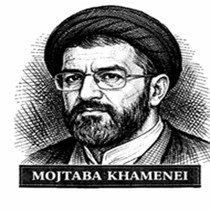 |
MOJTABA KHAMENEI Structural Score: 6.5 / 10 (Post-Adjustment) Cluster: Security Aligned Consolidators |
Profile: Mojtaba Khamenei operates within the core security and clerical power nexus of the Islamic Republic. His influence derives from proximity to the existing leadership structure and established relationships inside the IRGC command hierarchy. Unlike senior seminary figures, his authority is network-based rather than jurisprudentially dominant.
Institutional Position:
- Clerical Legitimacy: Formally qualified but lacking senior independent theological stature.
- Assembly Viability: Dependent on coordinated security-backed consolidation.
- IRGC Alignment: Strongest among top-tier candidates.
- Adjustment: Dynastic perception introduces legitimacy friction.
His elevation would signal security-priority succession rather than clerical-consensus succession.
- Governance Orientation: A Mojtaba leadership would likely centralize decision-making tightly within security institutions. Internal dissent management would take precedence over coalition accommodation. Institutional flexibility would narrow relative to consensus clerics.
- External Posture: Expect firmer deterrence signaling and reduced appetite for diplomatic recalibration. Strategic messaging would emphasize regime continuity through strength, not negotiation.
- Energy & Macro Implications: Markets would likely embed a wider geopolitical risk premium under this pathway. Export policy would remain structurally constrained by sanctions posture, with volatility expectations elevated relative to consensus candidates.
Comparative Assessment: Mojtaba represents the clearest IRGC-aligned consolidation scenario. His pathway strengthens coercive cohesion but weakens clerical consensus elasticity. Elevation under this model implies tighter internal discipline with higher external volatility expectations.
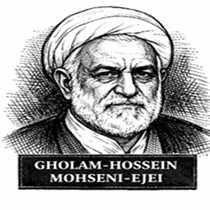 |
GHOLAM-HOSSEIN MOHSENI-EJEI Structural Score: 6.5 / 10 Cluster: Security Aligned Consolidators |
Profile: Gholam-Hossein Mohseni-Ejei serves as Chief Justice and has held senior intelligence and prosecutorial roles within the Islamic Republic. His authority is rooted in enforcement institutions rather than seminary prestige or dynastic proximity. He is closely associated with internal security discipline and judicial control mechanisms.
Institutional Position:
- Clerical Legitimacy: Constitutionally eligible but not a leading theological authority.
- Assembly Viability: Viable among hardline blocs; limited cross-faction elasticity.
- IRGC Alignment: Strong operational alignment through enforcement cooperation.
- Coalition Elasticity: Narrower than consensus clerics.
His pathway relies on internal security cohesion rather than doctrinal consensus.
- Governance Orientation: An Ejei leadership would likely prioritize domestic control, legal enforcement, and internal discipline. Institutional posture would skew toward consolidation through authority rather than negotiation. Political space would narrow rather than expand.
- External Posture: Expect a firmer adversarial tone with limited diplomatic experimentation. Sanctions durability would likely remain entrenched, and external signaling could become more confrontational during periods of pressure.
- Energy & Macro Implications: Markets would interpret this pathway as higher-volatility relative to clerical consensus figures. Export performance would likely remain constrained by sanction posture, with elevated geopolitical premium embedded in pricing expectations.
Comparative Assessment: Mohseni-Ejei represents a coercive continuity model anchored in judicial enforcement rather than dynastic security alignment. He strengthens internal control capacity but increases the probability of sustained external pressure and volatility.
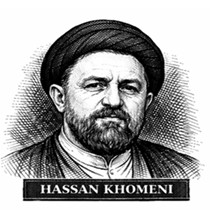 |
HASSAN KHOMEINI Structural Score: 5.5 / 10 Cluster: Recalibration/Adjustment |
Profile: Hassan Khomeini, grandson of Ayatollah Ruhollah Khomeini, carries symbolic revolutionary lineage and mid-tier clerical credentials. While constitutionally eligible, his political trajectory has included prior disqualification from the Assembly of Experts, underscoring institutional resistance within conservative vetting bodies. His influence derives more from symbolic capital and reform-leaning clerical networks than from embedded security alignment.
Institutional Position:
- Clerical Legitimacy: Eligible but not senior marja-level authority.
- Assembly Viability: Dependent on reform-leaning coalition plus elite recalculation.
- IRGC Alignment: Uncertain; skepticism likely within security ranks.
- Coalition Elasticity: Higher among technocratic and reform-adjacent blocs.
His pathway requires elite consensus that economic stabilization outweighs ideological rigidity.
- Governance Orientation: A Hassan Khomeini leadership would likely pursue tone recalibration rather than structural transformation. Institutional architecture would remain intact, but rhetorical posture and diplomatic engagement channels could soften relative to hardline alternatives.
- External Posture: Among viable candidates, he presents the highest probability of structured sanctions-for-compliance engagement. This would not represent abandonment of deterrence doctrine but could introduce incremental de-escalation signaling designed to relieve economic pressure.
- Energy & Macro Implications: Markets would likely interpret this pathway as volatility-compressing. Export capacity could expand toward technical production ceilings if sanction relief mechanisms partially reopen. Risk premium would narrow relative to security-heavy scenarios.
Comparative Assessment: Hassan Khomeini represents the lowest-probability but highest-macro-impact scenario among top-tier candidates. His elevation would signal recalibration without regime redesign. Viability depends less on constitutional eligibility and more on whether the security establishment tolerates controlled adjustment.
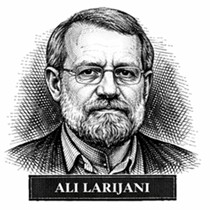 |
ALI LARIJANI Structural Score: 4.5 / 10 Cluster: Recalibration/Adjustment |
Profile: Former Speaker of Parliament and establishment figure with cross-faction relationships. While not a traditional marja-level authority, he maintains elite credibility. His elevation would require flexible constitutional interpretation under Article 109 clerical criteria¹².
- Security Posture: Threshold enrichment maintained¹⁰. Reduced rhetorical escalation compared to hardline clerics.
- United States Policy Orientation: Higher probability of diplomatic recalibration relative to ideological hardliners³⁵.
- Israel Policy Orientation: Deterrence posture preserved; emphasis on avoiding uncontrolled escalation.
- Europe Policy Orientation: Expanded engagement signaling likely, particularly in energy and financial channels.
- Business & Oil Policy Implications: Gradual export normalization toward upper sanctioned band possible⁶. Oil premium compresses under stabilized signaling¹⁵.
Comparative Assessment: Economically stabilizing candidate but constitutionally constrained pathway reduces probability.
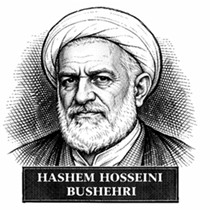 |
HASHEM HOSSEINI BUSHEHRI Structural Score: 5.0 / 10 Cluster: Low Momentum Clerical |
Profile: Ayatollah Hashem Hosseini Bushehri serves as Vice Chairman of the Assembly of Experts⁴⁶ and is a senior cleric with longstanding institutional ties within Qom’s seminary establishment. His procedural proximity to succession deliberations under Articles 107–111 of the Constitution⁴⁶ increases his visibility during transition negotiations. He possesses recognized clerical credentials but limited independent political machinery.
- Security Posture: Bushehri would likely preserve Iran’s threshold nuclear strategy, maintaining enrichment levels up to the currently documented 60% U-235 ceiling¹⁰ while preserving breakout ambiguity¹¹. Proxy force architecture across Lebanon, Iraq, Syria, and Yemen remains calibrated³⁴.
- United States Policy Orientation: Limited structural engagement. Sanctions architecture under U.S. Treasury frameworks remains largely intact³⁵, though tactical compliance signaling could occur.
- Israel Policy Orientation: Deterrence posture preserved via Hezbollah and regional networks³⁴. Escalation unlikely absent external trigger.
- Europe Policy Orientation: Incremental diplomatic signaling possible to stabilize maritime insurance spreads that have fluctuated due to regional tensions³⁶.
- Business & Oil Policy Implications: Exports likely remain within sanctioned band (~1.8–2.2m bpd)⁶. Oil risk premium remains embedded in Brent pricing ($5–$15 during elevated tension)¹⁵. OECD inflation transmission sensitivity remains ~0.3–0.5% per sustained $10 oil shift³⁰.
Comparative Assessment: Procedurally viable due to Assembly role but lacks strong IRGC consolidation narrative. Mid-tier structural pathway.
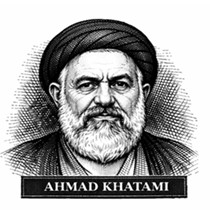 |
AHMAD KHATAMI Structural Score: 4.5 / 10 Cluster: Security Aligned Consolidators |
Profile: Ayatollah Ahmad Khatami is a senior cleric and long-standing Assembly of Experts member⁴⁶. Known for ideologically hardline sermons and doctrinal orthodoxy, he maintains strong conservative clerical alignment but limited cross-faction coalition-building capacity.
- Security Posture: Threshold enrichment posture maintained¹⁰. Breakout signaling may intensify under external pressure¹¹. Proxy deterrence hardened³⁴.
- United States Policy Orientation: Adversarial stance; sanctions durability reinforced³⁵.
- Israel Policy Orientation: Escalatory rhetoric likely heightened. Regional deterrence architecture maintained³⁴.
- Europe Policy Orientation: Limited diplomatic flexibility. Financial isolation persists under sanction cohesion³⁵.
- Business & Oil Policy Implications: Exports likely constrained near lower sanctioned band (~1.8–2.0m bpd)⁶. Sustained disruption expectations historically push Brent above $100 in high-volatility scenarios¹⁵. Emerging market currencies have depreciated 5–15% during comparable oil shocks⁴⁰.
Comparative Assessment: Ideologically consistent but economically volatile; lower coalition elasticity reduces probability.
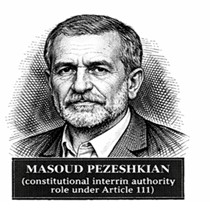 |
MASOUD PEZESHKIAN (INTERIM COUNCIL LEAD SCENARIO) Structural Score: 3.5 / 10 (Direct Leadership) Structural Score: 7.0 / 10 (Interim Council Role) Cluster: Non-Clerical Power Broker |
Profile: Masoud Pezeshkian has served as President of Iran and would constitutionally play a role in interim authority under Article 111 in the event of leadership vacancy⁴⁷. Although not a senior cleric of marja status, his executive position places him within temporary leadership mechanisms.
- Security Posture: As interim figure, nuclear threshold policy likely preserved without doctrinal shifts¹⁰¹¹. Proxy posture maintained but calibrated to prevent destabilization³⁴.
- United States Policy Orientation: Moderate signaling possible during interim period to stabilize economic conditions. Sanction enforcement remains structurally intact absent constitutional redesign³⁵.
- Israel Policy Orientation: Deterrence maintained; escalation avoided during transition.
- Europe Policy Orientation: Greater openness to European diplomatic engagement during interim stabilization window.
- Business & Oil Policy Implications: Interim governance uncertainty could temporarily widen oil premiums $5–$10¹⁵. However, if stabilization signals emerge, premiums may compress. Exports likely remain near baseline (~2m bpd)⁶.
Comparative Assessment: High relevance in interim phase but structurally low probability for permanent elevation without constitutional reinterpretation⁴⁶.
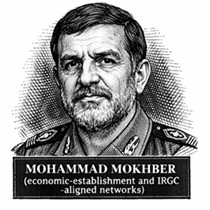 |
MOHAMMAD MOKHBER (ESTABLISHMENT POWER FIGURE) Structural Score: 4.0 / 10 Cluster: Non-Clerical Power Broker |
Profile: Mohammad Mokhber has served in senior executive roles including Vice President and head of major state-linked economic foundations⁴⁸. He maintains deep ties within establishment economic networks and IRGC-aligned commercial structures.
- Security Posture: Preserves nuclear threshold ambiguity¹⁰. Likely aligns with security establishment priorities¹¹.
- United States Policy Orientation: Limited engagement; sanctions architecture remains durable³⁵.
- Israel Policy Orientation: Standard deterrence doctrine preserved.
- Europe Policy Orientation: Commercial engagement possible if economic stabilization prioritized.
- Business & Oil Policy Implications: Given his economic background, emphasis likely placed on maximizing sanctioned export flows (~2.2m bpd)⁶ within existing enforcement constraints. Oil volatility tied primarily to external escalation rather than internal reform¹⁵.
Comparative Assessment: Technocratic-economic continuity figure. Viable in hybrid consolidation scenario but lacks clerical gravitas for apex constitutional authority⁴⁶.
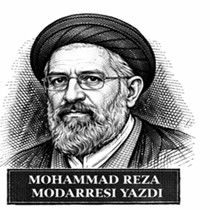 |
MOHAMMAD REZA MODARRESI YAZDI Structural Score: 4.5 / 10 Cluster: Low Momentum Clerical |
Profile: Ayatollah Mohammad Reza Modarresi Yazdi is a member of the Guardian Council and a cleric with longstanding institutional ties within Iran’s constitutional oversight framework. His influence derives from procedural authority and jurisprudential participation rather than broad clerical charisma or independent political machinery. He is viewed as a system-aligned figure embedded within existing vetting and supervisory institutions.
Institutional Position:
- Clerical Legitimacy: Constitutionally qualified under Article 109; recognized but not marja-level authority.
- Assembly Viability: Limited natural coalition momentum; viable primarily in negotiated compromise scenarios.
- IRGC Alignment: Acceptable but not security-anchored.
- Coalition Elasticity: Low; unlikely to generate independent consolidation momentum.
- Governance Orientation: A Modarresi Yazdi leadership would emphasize procedural continuity and strict constitutional interpretation. Governance style would likely prioritize institutional preservation over policy recalibration. Independent reform signaling would be unlikely.
- External & Security Posture: Nuclear threshold ambiguity would be maintained within the current baseline. External posture would reflect doctrinal continuity rather than escalatory innovation. Diplomatic experimentation would remain constrained.
- Energy & Macro Implications: Markets would likely interpret his elevation as continuity without volatility compression. Oil export performance would remain tied to existing sanctions architecture rather than internal policy shifts (see Macro Baseline Snapshot).
Comparative Assessment: Modarresi Yazdi represents a low-momentum clerical option suitable for compromise selection in fragmented Assembly scenarios. He does not command strong independent coalition energy and would likely emerge only under elite deadlock conditions.
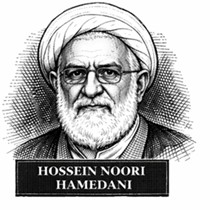 |
HOSSEIN NOORI HAMEDANI Structural Score: 4.0 / 10 Cluster: Low Medium Clerical |
Profile: Grand Ayatollah Hossein Noori Hamedani is a senior clerical authority within Qom’s religious establishment with longstanding theological credentials. His stature derives from traditional religious legitimacy rather than executive, security, or administrative leadership. While symbolically significant within clerical networks, he has limited direct engagement with contemporary governance structures.
Institutional Position:
• Clerical Legitimacy: Strong theological credentials; senior clerical standing.
• Assembly Viability: Limited active coalition-building role; unlikely to generate majority momentum.
• IRGC Alignment: Indirect; not institutionally embedded within security networks.
• Coalition Elasticity: Low; symbolic legitimacy exceeds operational consolidation capacity.
- Governance Orientation: A Noori Hamedani leadership would represent theological emphasis over administrative dynamism. Governance would likely defer heavily to established security and bureaucratic institutions rather than assert independent executive restructuring.
- External & Security Posture: Nuclear and proxy posture would remain within established doctrinal parameters. Escalatory innovation would be unlikely; deterrence continuity would be preserved.
- Energy & Macro Implications: Markets would likely interpret his elevation as symbolic continuity without material structural adjustment. Export levels and volatility range would remain anchored to existing sanctions and geopolitical dynamics. Comparative Assessment: Noori Hamedani functions more as a clerical legitimacy anchor than a practical consolidation candidate. His pathway would require unusual elite alignment and is structurally low probability relative to operationally embedded figures.
Under equal weighting, clerical consensus candidates retain structural advantage. When IRGC weighting increases to 35%, security-aligned candidates narrow the gap, with Mojtaba Khamenei reaching score parity with Araki. Consensus candidates are not displaced unless IRGC weighting rises materially above 40% or clerical legitimacy constraints weaken.
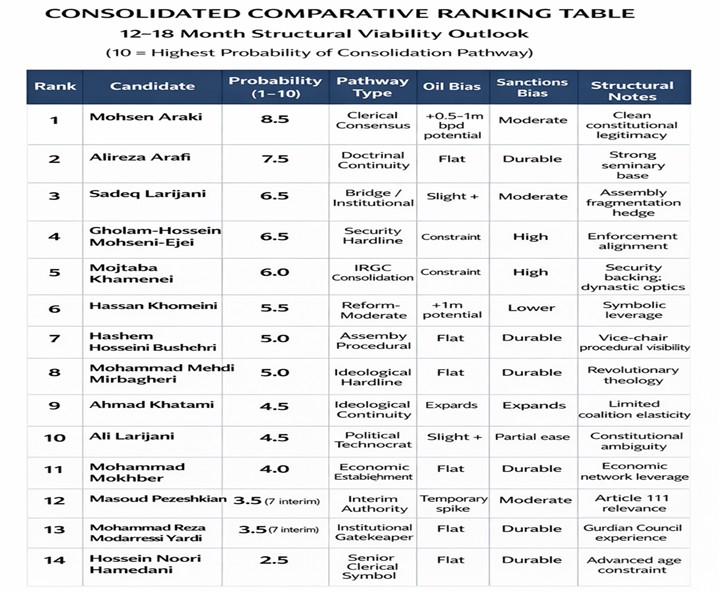
The model therefore remains stability-biased under current institutional assumptions.
STRATEGIC SUCCESSION ASSESSMENT
Comparative Evaluation of Candidates and Probable Outcome
STRUCTURAL FILTERS THAT MATTER
Before evaluating individual personalities, succession outcomes must pass through institutional constraints. Any viable successor must satisfy five non-negotiables:
- Clerical Qualification Under Article 109¹²
- Assembly of Experts Majority Viability¹²
- IRGC Tolerance or Support⁹
- Crisis Management Capacity Under 30–40% Inflation Conditions³
- Ability to Preserve Nuclear Threshold Ambiguity (60% enrichment baseline)¹⁰
Most candidates fail at least one of these filters.
IRGC INCENTIVE STRUCTURE ASSESSMENT
Among these variables, IRGC alignment is the decisive practical constraint. The Revolutionary Guard is not merely a security actor; it is an institutional stakeholder with embedded economic, political, and coercive interests.
Its incentive structure is shaped by three strategic calculations:
Institutional Preservation Over Personalization
The IRGC’s economic footprint (estimated 20–30% of GDP)⁹ is tied to regime continuity. Institutional stability protects revenue channels, sanctions-navigation mechanisms, and patronage networks. Dynastic or overtly security-personalized consolidation risks internal factional rivalry and increased external escalation pressure.
Sanctions Management vs Escalation Exposure
Although sanction-resilient, the IRGC is not sanction-indifferent. Escalatory succession that materially reduces oil export flows below baseline levels⁶ directly compresses state revenue and operational liquidity. Consensus clerical consolidation lowers the probability of immediate sanction intensification relative to overt hardline signaling.
Legitimacy Buffering
Clerical consensus preserves theological legitimacy while maintaining the existing security architecture. This reduces the perception of military capture of the state — a perception that could amplify protest intensity under sustained inflationary stress³.
For these reasons, IRGC tolerance does not automatically imply preference for maximal hardline consolidation. Institutional rationality favors stability unless regime survival is perceived to be directly endangered.
CANDIDATE CLUSTER ANALYSIS
- High-Probability Clerical Consensus Cluster
- Mohsen Araki
- Alireza Arafi
- Sadeq Larijani
These candidates share:
- Constitutional legitimacy¹²
- Established seminary standing
- Low dynastic controversy
- IRGC compatibility
They represent continuity without theatrical escalation. Among them, Araki presents the cleanest profile: minimal factional baggage, Assembly legitimacy, and doctrinal credibility.
- Security Consolidation Cluster
- Mojtaba Khamenei
- Gholam-Hossein Mohseni-Ejei
- Mohammad Mehdi Mirbagheri
- Ahmad Khatami
These candidates align strongly with enforcement and ideological orthodoxy.
Strength:
- IRGC alignment
- Coercive continuity
Weakness:
- Higher oil volatility risk¹⁵
- Elevated sanction durability³⁵
- Escalation premium $10–$20 per barrel likely embedded¹⁵
This pathway increases macro instability and inflation transmission risk³⁰.
- Reform / Recalibration Cluster
- Hassan Khomeini
- Ali Larijani
- Masoud Pezeshkian (interim role)
These figures would represent a shift toward limited sanctions engagement.
Strength:
- Potential export expansion toward ~3.0m bpd capacity⁵
- Risk premium compression $5–$15¹⁵
Weakness:
- IRGC skepticism
- Constitutional qualification friction¹²
This pathway requires elite consensus unlikely without economic crisis trigger.
- Procedural / Low-Probability Clerical Figures
- Hashem Hosseini Bushehri
- Mohammad Reza Modarresi Yazdi
- Hossein Noori Hamedani
- Mohammad Mokhber (non-clerical economic figure)
These candidates lack either:
- Strong IRGC coalition
- Marja-level authority
- Broad Assembly momentum
They function as negotiation placeholders more than end-state leaders.
Model Output Interpretation
Under equal five-variable weighting, the clerical consensus cluster retains structural advantage. Security-dominant weighting (30–35% IRGC emphasis) narrows the gap but does not fully displace consensus candidates unless coercive consolidation overrides clerical legitimacy constraints. The probability-weighted pathways below represent the formal model output.
PROBABILITY-WEIGHTED SUCCESSION PATHWAYS
- Clerical Consensus Continuity — 45-50%
Likely figures: Araki, Arafi, Sadeq Larijani
Expected characteristics:
- Nuclear ambiguity preserved¹⁰
- Proxy posture calibrated³⁴
- Oil exports stabilize within sanctioned baseline (~1.8–2.2m bpd)⁶
- Brent geopolitical premium contained within $5–$15¹⁵
Macro effect: Volatility contained; inflation transmission limited to baseline sensitivity (~0.3–0.5% OECD CPI per $10 oil move)³⁰.
This pathway preserves regime architecture while moderating shock risk.
Security Consolidation — 30%
Likely figures: Mojtaba Khamenei, Mohseni-Ejei, ideological hardliners
Expected characteristics:
- Breakout signaling intensifies¹¹
- Proxy tempo elevated³⁴
- Sanctions durability reinforced³⁵
- Brent premium widens toward $10–$20 range¹⁵
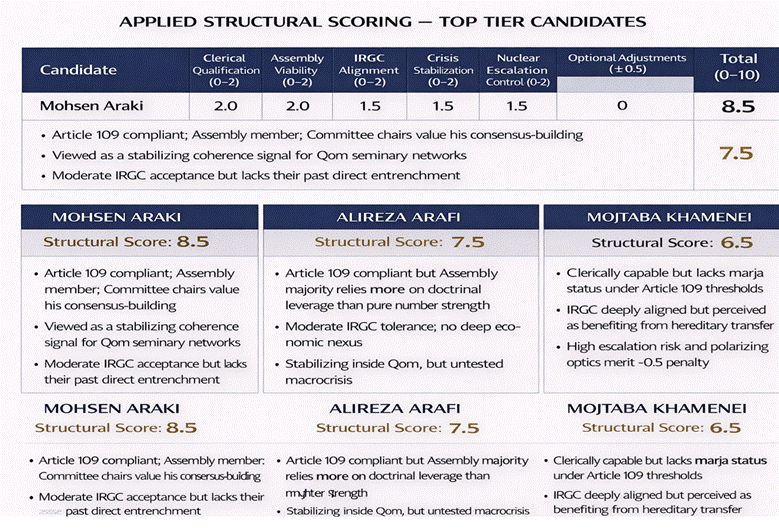
Macro effect: Higher embedded volatility; increased probability of sustained inflation persistence and emerging-market currency stress⁴⁰.
Controlled Recalibration — 15%
Likely figures: Hassan Khomeini, Ali Larijani, hybrid technocratic alignment
Expected characteristics:
- Limited sanctions-for-compliance reopening³⁵
- Expanded inspection signaling¹⁰
- Export movement toward ~3.0m bpd capacity⁵
- Brent compression of $5–$15¹⁵
Macro effect: Volatility compression and partial inflation relief. Requires IRGC accommodation.
Fragmentation / Civil Conflict — 5%
Trigger conditions required:
- IRGC command fracture⁹
- Assembly deadlock with competing legitimacy claims¹²
- Severe macro collapse: sustained export contraction materially below ~1.5m bpd.⁶
Absent security fragmentation, systemic civil war remains structurally unlikely.
EXTERNAL REGIME-DISPLACEMENT CONTINGENCY
Collapse-Contingent Restoration Scenario
Reza Pahlavi is not a constitutional succession candidate. He does not meet Article 109 clerical criteria, holds no institutional role within the Assembly of Experts, and exercises no command authority inside Iran’s coercive apparatus. His relevance is therefore not succession-based — it is collapse-contingent.
He becomes structurally relevant only under systemic failure conditions involving:
- IRGC command fragmentation
- Prolonged Assembly deadlock with competing legitimacy claims
- Territorial security breakdown
- Sustained macroeconomic collapse materially below the current export baseline
Absent these converging failures, monarchist restoration remains outside the feasible decision set.
Structural Constraints
Current limitations include:
- No organized internal armed network
• No embedded bureaucratic infrastructure
• No command relationship with IRGC or Artesh
• Reliance primarily on diaspora-aligned support
Modern regime transitions are determined by control of coercive institutions — not symbolic lineage alone.
Market Implications Under Collapse
If — and only if — a restoration-aligned authority achieved territorial consolidation:
- Sanctions relief could accelerate materially
• Oil exports could move toward technical capacity (~3.0–3.3m bpd)
• Brent geopolitical premium could compress
However, the transition phase would likely produce severe short-term volatility, including currency instability, insurance spread expansion, and temporary export disruption.
Probability Assessment
Under current IRGC cohesion assumptions, structural probability remains materially below 10%. Probability rises only in parallel with security fragmentation — the same trigger required for civil conflict.
Reza Pahlavi is therefore not a succession variable. He is a system-failure variable.
6–12 MONTH WATCH INDICATORS
Monitor:
- Public or leaked evidence of IRGC factional divergence
- Assembly voting timeline beyond 90–120 days¹²
- Sustained export decline below 1.5m bpd⁶
- Breakout signaling escalation beyond current threshold¹¹
- Hormuz-related insurance premium spikes³⁶
The first 180 days determine whether volatility remains episodic or becomes structural.
STRATEGIC CONCLUSION
The post-Khamenei transition is structurally constrained by institutional filters rather than individual ambition.
Under current IRGC cohesion assumptions, probability weighting favors clerical consensus consolidation. Security-aligned consolidation narrows the margin under elevated IRGC weighting but does not displace consensus candidates absent clerical legitimacy erosion.
Succession is unlikely to alter Iran’s core deterrence architecture. The framework recognizes that the decisive short-term variable remains IRGC command cohesion, while the decisive long-term variable is constitutional limitation of concentrated authority. It will influence the volatility range embedded in energy markets, sanctions durability, and regional signaling posture.
The decisive variable remains command cohesion within the IRGC. Model inversion requires measurable fragmentation.
SYSTEM FAILURE SCENARIO — LOW PROBABILITY, HIGH IMPACT
- STRUCTURAL BASELINE
Full-scale civil conflict in Iran remains a low-probability, high-impact contingency.
Three structural anchors currently mitigate systemic collapse:
- Centralized IRGC command cohesion⁹
• Integrated national coercive hierarchy under Articles 107–111¹²
• Oil exports sustained within the sanctioned baseline (~1.8–2.2m bpd)⁶
Absent fracture of centralized coercive command, unrest is likely to remain episodic rather than territorial.
Systemic conflict requires simultaneous institutional breakdown — not isolated protest escalation.
TRIGGER CONVERGENCE MODEL
Sustained internal conflict would likely require at least three concurrent failures:
- IRGC Command Fragmentation
Emergence of parallel chains of authority within the Revolutionary Guard. - Assembly Deadlock with Competing Legitimacy Claims
Extended succession paralysis under Articles 107–111¹² accompanied by rival clerical declarations. - Severe Macroeconomic Breakdown
Sustained export collapse below ~1m bpd⁶ combined with inflation materially exceeding recent 30–40% levels³. - Provincial Security Defection
Regional Basij or IRGC units aligning with competing authority centers.
Without multi-variable convergence, civil conflict remains structurally unlikely.
EARLY WARNING WINDOW (FIRST 90–180 DAYS)
Key destabilization indicators:
- Documented IRGC factional divergence
• Armed mobilization outside centralized command channels
• Dual claims of supreme religious authority
• Extended communications blackouts beyond protest-containment norms
• Currency depreciation outside prior sanction-era bands³
The first six months determine whether instability remains containable or escalates into structural fracture.
MARKET TRANSMISSION CHANNELS
If fragmentation materializes, shock transmission would occur primarily through energy systems:
Direct Supply Disruption
Sustained export losses below 1m bpd could widen Brent risk premiums materially¹⁵.
Hormuz Risk Escalation
Instability near a chokepoint carrying ~20% of global petroleum liquids⁸ would expand maritime insurance spreads³⁶ and embed geopolitical pricing premiums.
Secondary spillovers may include:
- Renewed OECD inflation persistence³⁰
• Emerging-market currency stress episodes⁴⁰
• Elevated defense and energy sector volatility
Shock magnitude would depend on duration and territorial control dynamics.
NUCLEAR AND PROXY ESCALATION RISK
Under systemic fragmentation:
- Nuclear signaling ambiguity could accelerate¹¹
• Infrastructure miscalculation risk may increase¹⁰
• Proxy networks could operate with reduced central coordination³⁴
PROBABILITY THRESHOLD
Current structural probability of civil conflict: <10%.
Probability increases materially only if:
- Centralized coercive command fragments
• Succession deadlock exceeds 3–6 months
• Export flows collapse below sanctioned baseline
Absent these conditions, systemic civil war remains outside the primary decision set.
STRATEGIC BOTTOM LINE
Civil conflict is not the baseline trajectory.
Iran’s institutional architecture centralizes coercive authority, integrates security hierarchies, and preserves revenue flow even under sanctions pressure.
The escalation from episodic unrest to structural instability would require fragmentation of centralized command authority.
That remains the gating variable.
APPENDIX A – FOOTNOTES
- World Bank, World Development Indicators, 2024.
- International Monetary Fund (IMF), World Economic Outlook Database, 2025.
- IMF, Islamic Republic of Iran: Staff Report, 2024.
- World Bank, Labor Force Data — Iran Youth Unemployment, 2024.
- International Energy Agency (IEA), Oil Market Report, 2025.
- U.S. Energy Information Administration (EIA), Iran Oil Export Data, 2024–2025.
- BP, Statistical Review of World Energy, 2024.
- U.S. Energy Information Administration (EIA), World Oil Transit Chokepoints, 2024.
- U.S. Department of the Treasury; Carnegie Endowment for International Peace, IRGC Economic Assessments, 2023.
- International Atomic Energy Agency (IAEA), Verification and Monitoring Report on Iran, 2024.
- Institute for Science and International Security, Breakout Timeline Assessment, 2024.
- Constitution of the Islamic Republic of Iran (1979; amended 1989), Articles 107–111.
- Center for Strategic and International Studies (CSIS), Iran Proxy Network Estimates, 2024.
- Lloyd’s Market Association, Marine War Risk Reports, 2024.
- International Energy Agency; Bloomberg, Brent Historical Volatility Data, 2019–2024.
- Organisation for Economic Co-operation and Development (OECD), Oil Price Transmission and Inflation Outlook, 2023–2024.
- U.S. Department of the Treasury, Iran Sanctions Overview, 2024.
- Iranian Judiciary Records and Official Biographical Documentation, 2024.
- Carnegie Endowment for International Peace, Profile: Mojtaba Khamenei, 2023.
- Bank for International Settlements (BIS), Oil Shock and Emerging Market Currency Study, 2022.
- Constitution of the Islamic Republic of Iran, Articles 91–99 (Guardian Council authorities).
- IAEA, Enrichment Monitoring Data — 60% U-235 Reporting, 2024.
- Institute for Science and International Security, Nuclear Breakout Latency Modeling, 2024.
- CSIS, Regional Proxy Force Capabilities Assessment, 2024.
- U.S. Department of the Treasury, Sanctions Enforcement Architecture — Iran, 2024.
- United Nations Conference on Trade and Development (UNCTAD); Lloyd’s Market Association, Red Sea Maritime Disruption Data, 2023–2024.
- IEA, Iran Oil Production Capacity Estimates, 2025.
- IEA; Bloomberg, Oil Elasticity and Price Response Modeling, 2019–2024.
- U.S. EIA, Monthly Iranian Export Estimates, 2024–2025.
- OECD, Inflation Sensitivity to Energy Shocks, 2023.
- Assembly of Experts Membership Records; Official Clerical Biographies, 2024.
- IAEA, Verification and Monitoring Report, 2024 (confirmation of 60% enrichment level).
- Institute for Science and International Security, Breakout Timeline Scenario Analysis, 2024.
- CSIS, Iran Regional Military Network Overview, 2024.
- U.S. Department of the Treasury, Sanctions Designations and Human Rights Listings — Iran, 2024.
- Lloyd’s Market Association; UNCTAD, Insurance and Maritime Risk Premium Data, 2024.
- U.S. EIA, Iran Export Flow Analysis, 2024–2025.
- IEA; Bloomberg, Brent Pricing Volatility and Geopolitical Premium Study, 2019–2024.
- OECD, Oil Shock Transmission and CPI Impact Modeling, 2023–2024.
- BIS, Currency Depreciation During Oil Shock Events, 2022.
- Consolidated Baseline Macroeconomic Context (see notes 1–40 above).
- Constitutional Interim Leadership Provisions under Article 111, Islamic Republic of Iran Constitution.
- Iranian Presidential Authority and Transitional Governance Mechanisms, Official Executive Documentation, 2024.
- Establishment Economic Foundation Leadership Records, 2024.
- Guardian Council Vetting Authority and Assembly Qualification Review Procedures, Constitution Articles 91–99.
- Assembly of Experts Procedural Authorities, Constitution Articles 107–111.
- Constitution of the Islamic Republic of Iran, Article 111 (Interim Authority Framework).
- Iranian Executive Branch and Vice-Presidential Authority Documentation, 2024.